Navigating the India Regulatory Landscape: An Interview with Nayeem Syed of Infill Life
The following is a clean verbatim transcript from an episode of The Elendi Files.
Host Teddy, General Manager of ElendiLabs, speaks with Nayeem Syed from Infill Life to discuss the complexities of entering the Indian medical product market and the role of the health authority, CDSCO.
Teddy: Hi everyone. Welcome to The Elendi Files, where we navigate the complexities of the global regulatory landscape of medical products. Our goal is to help make global medical product regulations accessible to everyone. Whether you're a manufacturer, a regulatory specialist, or the CEO of a medtech startup, you're in the right place. Be sure to connect with us on LinkedIn and our website, elendilabs.com.
I am Teddy, the General Manager of ElendiLabs. At ElendiLabs, we are all about connecting clients—medical product manufacturers, medtech startups, and biotech startups—with the right regulatory expertise to get products to people faster. Today, I’m thrilled to be joined by Nayeem from Infill Life, a firm that helps navigate the complexities of the Indian market. We're going to spend some time learning more about the regulatory landscape in India and the Indian health authority, the CDSCO. Nayeem, thanks for being here. To kick things off, could you give us a brief introduction of what Infill Life specializes in?
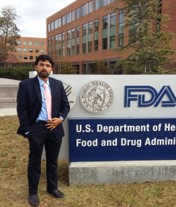
Nayeem: Thank you, Teddy. At Infill Life, we specialize in providing comprehensive regulatory support for companies looking to enter the Indian market. We handle everything from device classification and registration with the CDSCO to acting as an Authorized Indian Representative (AIR) for foreign manufacturers. We essentially bridge the gap between complex local requirements and global manufacturers.
Teddy: Good. And so you're mainly based in India. Do you provide services outside India? For example, if we have requests from the US or the EU, do you also support services there?
Nayeem: Yes, we do. While our primary focus is the Indian market, we provide global support, including assistance with EU MDR compliance and US FDA submissions. We help manufacturers navigate various international regulatory hurdles to ensure their products reach global markets.
Costs and Timelines
Teddy: It’s good to know that not only in India, but Infill Life can also provide services in other countries—especially the EU and the UK, which have the largest medical product markets in the world. Let's dive a bit deeper. We have many questions about the cost and timelines for registering, for example, a Class A medical device in India. Is it expensive? What is the timeline like?
Nayeem: Class A devices are generally the least expensive and fastest to register because they are considered low-risk. The registration process is largely conducted through self-declaration on the Sugam portal. Typically, the timeline is quite short compared to higher-risk classes, and the government fees are minimal.
| Device Category | Risk Level | Licensing Authority |
|---|---|---|
| Class A | Low Risk | State Licensing Authority / Sugam |
| Class B | Low-Moderate Risk | State Licensing Authority |
| Class C | Moderate-High Risk | Central Licensing Authority (CDSCO) |
| Class D | High Risk | Central Licensing Authority (CDSCO) |
Teddy: I understand there are four classes, from Class A to Class D. For In-Vitro Diagnostics (IVDs), they are also classified into four classes—Class A to Class D. So, for IVDs and medical devices, they have the same categorization. That’s a fun fact. I would like to know, you just mentioned a state license and a central license. What is the difference between a state license and a central license?
Nayeem: The primary difference lies in the risk level of the device. State licenses are typically managed by State Licensing Authorities for lower-risk manufacturing (Class A and B). Central licenses, however, are handled by the CDSCO (the Central Licensing Authority) for riskier classes of devices, such as Class C and Class D, as well as for all import licenses.
Import Licenses and the AIR Role
Teddy: Okay. So central licenses are for riskier classes of devices, for example, Classes C and D. Regarding import licenses, I understand that India's medical device landscape has changed a lot in the last three years with the transition to a fully regulated market under the Medical Device Rules 2017. What is the most important thing an international manufacturer needs to understand before they apply for an import license regarding the new changes in the regulations?
Nayeem: The most important thing is that the market is now fully regulated. An international manufacturer must appoint a local Authorized Indian Representative (AIR) who is responsible for the product in India. This entity must be a legal company in India and must hold a valid wholesale license before they can even begin the application process.
Teddy: Any additional requirements for the local entity? Would any local entity be eligible for applying for an import license, or does the local company have to have certain certificates or a CDSCO code before they can apply?
Nayeem: The local company must be registered with the CDSCO and obtain a specific credentials code. They cannot apply for an import license without this registration and a valid power of attorney from the manufacturer.
Teddy: Right. So the threshold for applying for an import license isn't that low. I think we should also seek professional help, especially from companies like Infill Life, to apply. Some international clients are worried about the link between authorized agents and local licensed importers because some authorized agents might also be the local license importers at the same time. How does Infill Life act as the essential link between a foreign manufacturer and the CDSCO?
Nayeem: We act as an independent link. By serving as the authorized agent, we ensure that the manufacturer maintains control over their registration. We handle the communication with the CDSCO and ensure all technical documentation meets their standards, preventing the manufacturer from being "locked in" by a single commercial distributor.
The ICMED Scheme and Quality Compliance
Teddy: Okay, good. Let’s move on to something more specific. I understand that India accepts ISO 13485. There is also the Indian Certification for Medical Devices (ICMED) scheme. For foreign brands, is it necessary to pursue local quality certifications, or can they rely solely on their global audit reports to satisfy the Indian regulators? Do companies have to comply with both local and international regulations to have the product legally registered in India?
Nayeem: For registration, the CDSCO generally accepts ISO 13485 and global audit reports. The ICMED scheme is a local certification that is not strictly mandatory for registration, but it is highly regarded.
Teddy: So it's not mandatory, but in order to gain a stronger foothold in the local market, would you recommend companies also get this ICMED scheme approval? For example, if I were to enter the local market—public hospitals, private clinics, and other sectors—would this local certification grant a strong advantage over other companies?
Nayeem: Yes, it is a significant advantage. Having the ICMED certification can provide a preference in government tenders and build trust with local healthcare providers who value local quality benchmarks.
Teddy: Okay, so it’s an advantage. But is it very expensive and time-consuming? I imagine maybe not many of your clients seek this certification because it is way too complicated?
Nayeem: It can be rigorous, which is why some find it complicated. However, for companies committed to the Indian market long-term, the investment is worth it. For many others, the basic CDSCO registration already meets the requirements for initial entry.
High-Risk Devices and Clinical Data
Teddy: That already meets the basic requirements. Another question often heard is that India is becoming stricter regarding local clinical investigations for high-risk devices like Classes C and D. Is it still possible to register a high-risk device using only global clinical data, or is the CDSCO increasingly demanding Indian-specific clinical evidence?
Nayeem: The CDSCO is indeed becoming stricter. While global data is still used, they are increasingly looking for local clinical evidence under Schedule VII. If the device is high-risk, they may require local "bridging studies" to ensure the device is safe and effective for the Indian population.
Teddy: So, to make sure we are on the same page, for riskier products, the importance of local clinical data is quite high. You follow Schedule VII for local clinical studies?
Nayeem: Exactly. Schedule VII of the Medical Device Rules outlines the requirements for clinical investigations. For high-risk products, the CDSCO often mandates these local studies to validate the global data.
Digitalization: Sugam and ICEGATE
Teddy: That is quite complicated. As the CDSCO is stepping up its game to impose stricter regulations, local companies like Infill Life have to keep abreast of the latest updates to ensure products are successfully registered. I also hear that the Sugam portal was relaunched in 2025 as an electronic automated platform. I'm not sure if I understand this correctly, but the old Sugam system was not fully electronic?
Nayeem: That’s correct. The new Sugam portal is a fully online, automated platform designed to streamline the application process. The transition from the old system involved migrating data, and unfortunately, some applications were nullified or cancelled during that migration.
Teddy: What is the most common data mismatch error causing rejections in the new system during this migration? What are the common mistakes that lead to rejections on the new platform? Are there any written protocols or clearly stated instructions based on the standards that foreign manufacturers should follow?
Nayeem: The most common errors involve mismatches between the manufacturer’s name or address on the ISO certificates versus the application form. Even a minor typo can cause a rejection in an automated system. The CDSCO has provided some guidance, but manufacturers must be extremely precise with their documentation to align with the new digital standards.
Teddy: Right, okay. Regarding the electronic system, since India is moving toward digital platforms, the customs declaring system has also been revised. How is the CDSCO linking import licenses (MD-15) directly to customs clearance via the ICEGATE system in 2026? Are the systems integrated? I'm not a tech guy, but is there a backend system that links them? Is ICEGATE the bridge?
Nayeem: Yes, the ICEGATE system acts as the bridge. It integrates the CDSCO’s license database with the Customs department. This allows for real-time verification of import licenses at the port of entry, which is part of the broader National Single Window System initiative.
Teddy: But is it smooth? Is the system well in place so that users can declare their imports and exports automatically whenever they apply for licenses?
Nayeem: It is a transition. While the goal is a seamless National Single Window, there are still occasional technical hurdles as everyone adapts to the new system. It is designed to make things more efficient in the long run.
Technical Staff and Reclassification
Teddy: One more question. The CDSCO is increasing its scrutiny of technical staff qualifications. Do companies like Infill Life have to appoint a dedicated regulatory team to fulfill the role, or can a commercial distributor still fulfill this role? Are there written regulations or standards for the qualification requirements of the technical staff?
Nayeem: The requirements for technical staff have become much more stringent. They must have specific educational backgrounds and experience in medical devices. While a distributor can theoretically fulfill the role, they often lack the specialized regulatory knowledge required to meet the CDSCO’s expectations during audits or when reviewing CVs and qualifications.
Teddy: So, there is an expectation from the CDSCO. Even if they don't have a very clear statement for every standard, they will look at the CVs, qualifications, and experience of the technical staff. Really one final question: In 2025, over 500 devices were reclassified, many moving from lower-risk classes like A and B to Class C or D. Is this shift affecting a lot of companies, and why was there such a change?
Nayeem: This shift has affected many manufacturers. The change was driven by the need to align Indian regulations with international standards and to ensure that higher-risk devices are subject to more rigorous oversight. Companies have had to update their dossiers and compliance strategies to accommodate these higher classifications.
"In 2025, over 500 devices were reclassified. This alignment with international standards means manufacturers must now update compliance strategies for higher-risk oversight."
Teddy: Well, that was a very fruitful and rewarding interview with Nayeem. These are some incredible practical insights. Thank you so much again, Nayeem, and thank you to everyone listening or reading the transcript. We will be featuring Infill Life as a regulatory specialist firm on our platform, the ElendiLabs platform. Thanks again for joining us, and we'll see you on the platform. If you haven't checked our website, please head to elendilabs.com and be sure to connect with us on LinkedIn.